Religious education

The aim of Christian parents and teachers, which they should always keep at least in the back of their minds, is: to inspire in the children personal love for Christ and for the Mother of God. If a child grows up honouring Christ and the Mother of God as beloved persons, this love will establish his heart in God, and even if he later goes through doubts, or even leaves the Church, at least he will not be against Christ in his heart; this may even be enough for his salvation.

The religious education of children is mainly brought about by example, and by the atmosphere of love and prayer in the home. The child's heart is touched; without explanations he acquires prayer as a natural activity, and without needing logical proofs he knows God's presence.
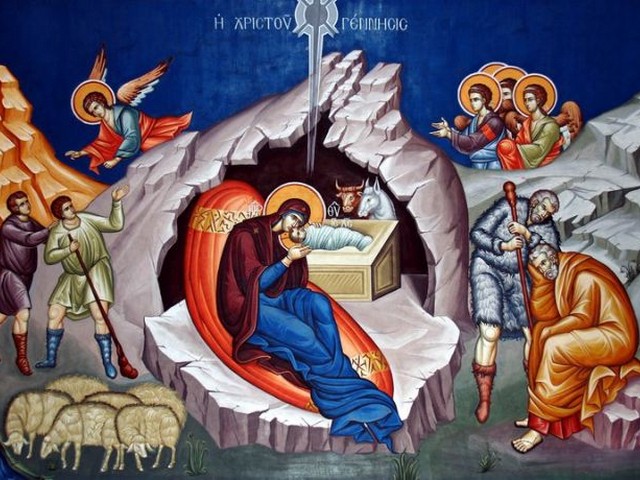
On celebration of family patron saint’s day ("slava")

The celebration of the Family Patron Saint's Day (or "Slava" in Serbian) is a Serbian custom which represents one of the main forms of expression of the Orthodox faith in Serbs, and which is not practiced by any other people. On that day, the celebrating family celebrates its patron saint who prays for that family before the Lord. Not only a family – a church, city, village, and even a trade or an association can have its own Slava.

Great Lent

Dear brothers and sisters,

The Great Lent begins on Clean Monday, 14 March 2016. It lasts forty days up to the Lazarus Saturday and is also known as the Great Forty Days Fast. Following the Palm Sunday which introduces the Passion Week, we enter the miraculous Feast of Pascha, the feast of all feasts, the ultimate goal of our Lenten pilgrimage.

As we eat fasting food, mainly fruit and vegetables in the forthcoming weeks, we are invited to direct our body and soul towards the Kingdom of God. The Great Lent arouses our hidden spiritual powers showing a victory over matter and reveals the true meaning of life, lived in God. Christ's words to the vile tempter, 'it is written, man shall not live by bread alone, but by every word that proceedeth out of the mouth of God' (Matthew-4-4), become our Lenten motto.

Forgiveness

That God may forgive us, let us forgive men.
We are all on this earth as temporary guests.
Prolonged fasting and prayer is in vain
Without forgiveness and true mercy.
God is the true Physician; sins are leprosy.
Whomever God cleanses, God also glorifies.
Every merciful act of men, God rewards with mercy.
He who returns sin with sin perishes without mercy.
Pus is not cleansed by pus from infected wounds,
Neither is the darkness of the dungeon dispelled by darkness,
But pure balm heals the festering wound,
And light disperses the darkness of the dungeon.
To the seriously wounded, mercy is like a balm;
As if seeing a torch dispersing the darkness, everyone rejoices in mercy.
The madman says, "I have no need of mercy!"
But when he is overcome by misery, he cries out for mercy!
Men bathe in the mercy of God,
And that mercy of God wakens us to life!
That God may forgive us, let us forgive men,
We are all on this earth as temporary guests.

St Nikolay Velimirovic

Patriarchal Nativity Encyclical 2014

Божић

The Serbian Orthodox Church to her spiritual children at Christmas, 2014

+IRINEJ

By the Grace of God

Orthodox Archbishop of Pec, Metropolitan of Belgrade Karlovci and Serbian Patriarch, with all the Hierarchs of the Serbian Orthodox Church to all the clergy, monastics, and all the sons and daughters of our Holy Church: grace, mercy and peace from God the Father, and our Lord Jesus Christ, and the Holy Spirit, with the joyous Christmas greeting:

Peace from God! Christ is Born!

The historical and cultural significance of Saint Sava

The life of St Sava has been recorded in many different forms. The first accounts were written as hagiographies – the lives of Saints – and the most famous of these was the thirteenth-century Žitije svetog Save (The Life of Saint Sava) by the monk Teodosije. Later, we find his name and events from his life circulating in stories, legends and ballads, celebrated by the ordinary people as evidence of his enduring appeal during the centuries of Ottoman domination over Serbia. In the twentieth century, biographies of his life have continued to appear, for example by the Serbian avant-garde writer Miloš Crnjanski in 1934 and by Bishop Nikolaj Velimirović in 1957. He appears as a character in novels and stories by some of Serbia's foremost authors, and we are reminded of Saint Sava as one of the first poets writing in the Serbian language in a famous anthology published in 1964. The figure of Saint Sava has flourished through the centuries to our own day.

Velika sala baner

Hall rental

Brookwood-banner

Brookwood

spc-london-baner-vesti

News and events

Contact

St.Sava church adress:
89 Lancaster Road
London
W11 1QQ
Telephone: 020 7727 8367
E-mail: crkva@spclondon.org.uk


Donations

paypal-donate

If you want to make a payment directly to the account of the SOC, please go to DIRECT PAYMENTS page.